West coast coffee roasters
Rwanda KANYA 826
Rwanda KANYA 826
Couldn't load pickup availability
Shipping
Shipping
Royal Mail Postal service
(Tracked 48 Hour)
Rwanda KANYA 826
Tasting Notes
Chocolate Orange | Praline | Nougat
Farm / producer - Multiple Smallholders
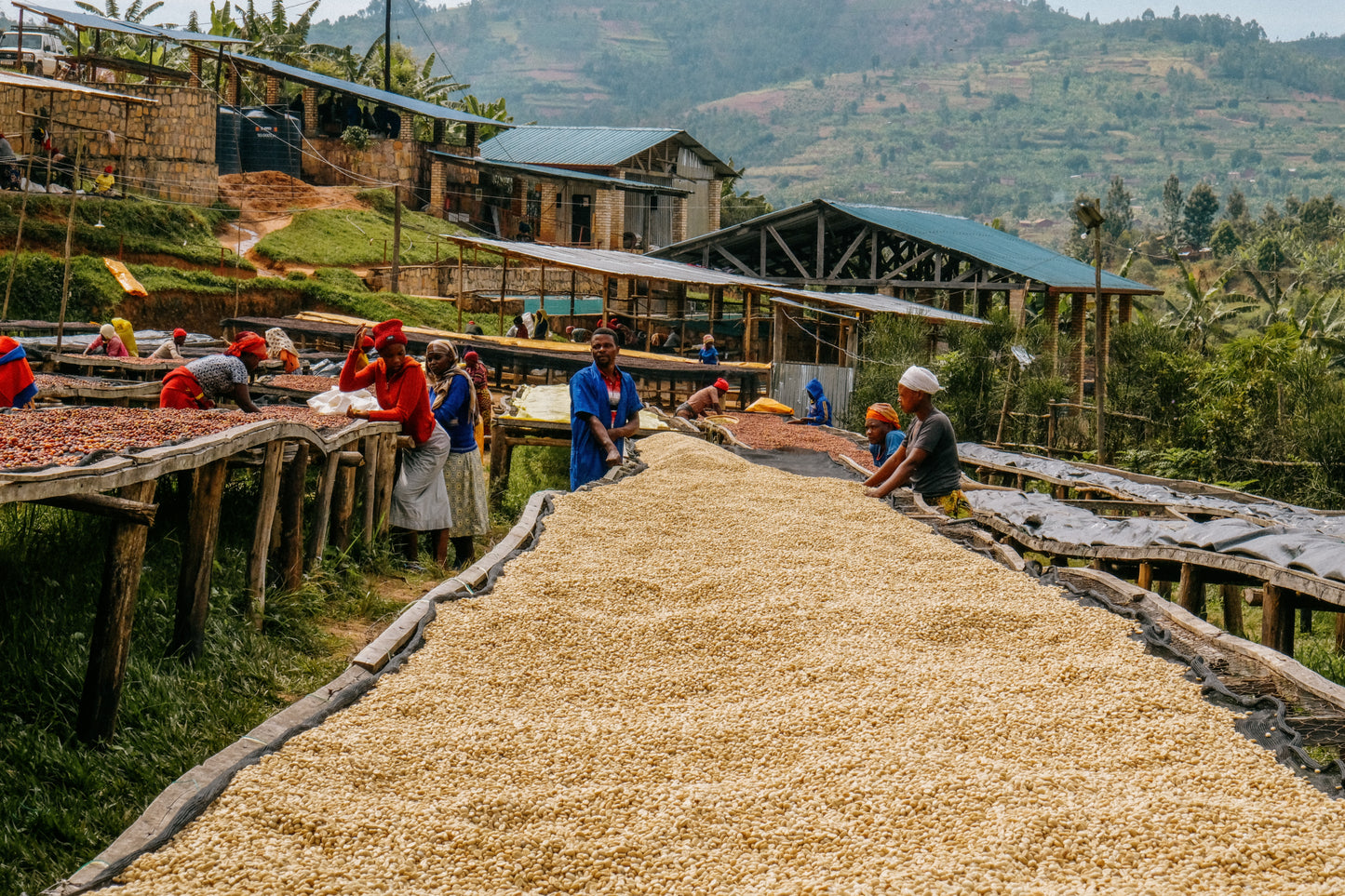
Wet-mill - Kanya washing station
Importer - Falcon coffees
Process - Natural
Plant species - Arabica
Varietal - Red Bourbon
Altitude - 1545 MASL
Cup Score - 85.75
Info by Falcon Coffee
Origin
Rwanda is blessed with ideal coffee growing conditions that include high altitude, regular rainfall, volcanic soils with good organic structure and an abundance of Bourbon.
The vast majority of Rwandan coffee is produced by smallholders of which there are thought to be around half a million with parcels of land often not much larger than just one hectare per family.
Coffee is grown in most parts of the country, with particularly large concentrations along Lake Kivu and in the southern province.
Rwandan smallholders organise themselves into cooperatives and share the services of centralised wet-mills or washing stations as they are known locally. Flowering takes place between September and October and the harvest runs from March to July, with shipments starting in August through December.
Producers
Kanyamibwa Edmond, the previous owner of Kanya Washing station, built it as a mini washing station in 2014 using a loan from RTC.
A resident of the area, he had always been interested in coffee, and used the station to learn and perfect the methods of processing cherries.
Over the following years, Kanya grew to process high quality and significantly increased the capacity of the station to handle more volume. Kanyamibwa, used the profits from Kanya to build a second washing station, and in 2017 he decided to sell Kanya to RTC so that he could continue to properly manage the operations of his second washing station.
At the Kanya washing station strict processing are followed, the coffee is first passed through floatation tanks to remove any foreign matter, under ripe and floaters.
After that the coffee is machined pulped with the help of a Penagos de-pulper, after this the coffee is dry fermented in a specific storage space for around 24 to 36 hours and the mucilage removed before being placed to dry on raised beds for a period from 15 to 22 days.